 MARC
MARC
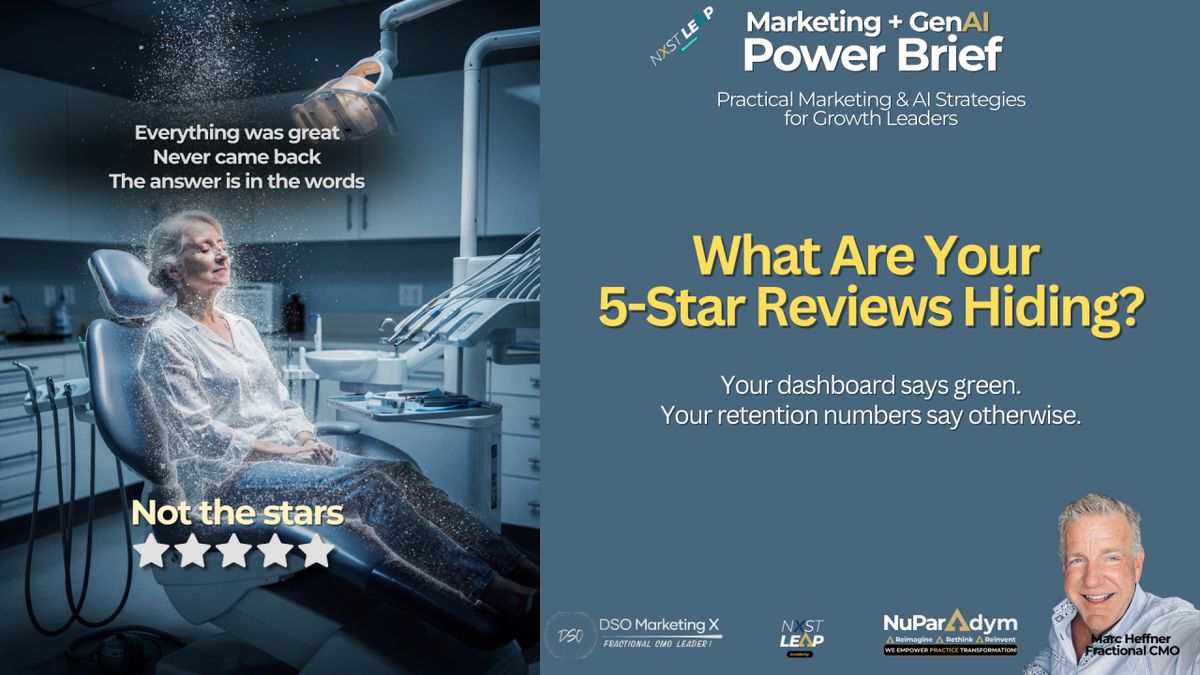
We are drowning in green dashboards but starving for retention. Here is the new science of sentiment mining.
The most dangerous patient in your practice is not the one who screams at the front desk.
It is not the one who leaves a one-star review in all caps.
Those patients are loud. You know exactly what went wrong. You can fix it.
The most dangerous patient is the one who leaves a 5-star review. They smile at checkout. They say "everything was great."
THEN THEY GHOST YOU!
They cancel their recare appointment two weeks later. They never accept the treatment plan for the crown. They drift away to a competitor.
You have no idea why. Your dashboard shows a green "4.9 Star Average." Your marketing team is celebrating. Your reputation management software says you are winning.
But your retention numbers are bleeding money.
This is the Positivity Paradox.
In the dental industry, we are addicted to "Valence." We categorize feedback as Positive, Neutral, or Negative. We chase the high score.
But a 5-star rating is a blunt instrument. It hits a ceiling. It lacks variance. When everyone gives you a high score, the score stops predicting business outcomes. It stops telling you who will actually move forward with treatment.
The gold is not in the stars. It is in the unstructured text. It is in the emotions buried between the lines.
The data backs this up. 81% of patients hesitate to follow their dentist's recommendations.
The top reasons:
- (53%) cost
- (28%) fear
- (18%) perceived lack of urgency
None of those show up in your star rating. All of them show up in the words patients use.
If you want to fix capacity leaks, boost case acceptance, and stop ghost revenue, you have to stop counting stars.
You have to start mining emotions.
Here is the operational blueprint.
The Short Version:
- The average case acceptance rate is 46%. Patients are not saying no to treatment. They are saying no to how you communicate.
- A "sad" patient needs empathy. An "angry" patient needs resolution. Treat them the same and you lose both.
- 59% of patients are more likely to accept treatment when AI is involved. Practices using AI detection see $78,268 more in annual production per location.
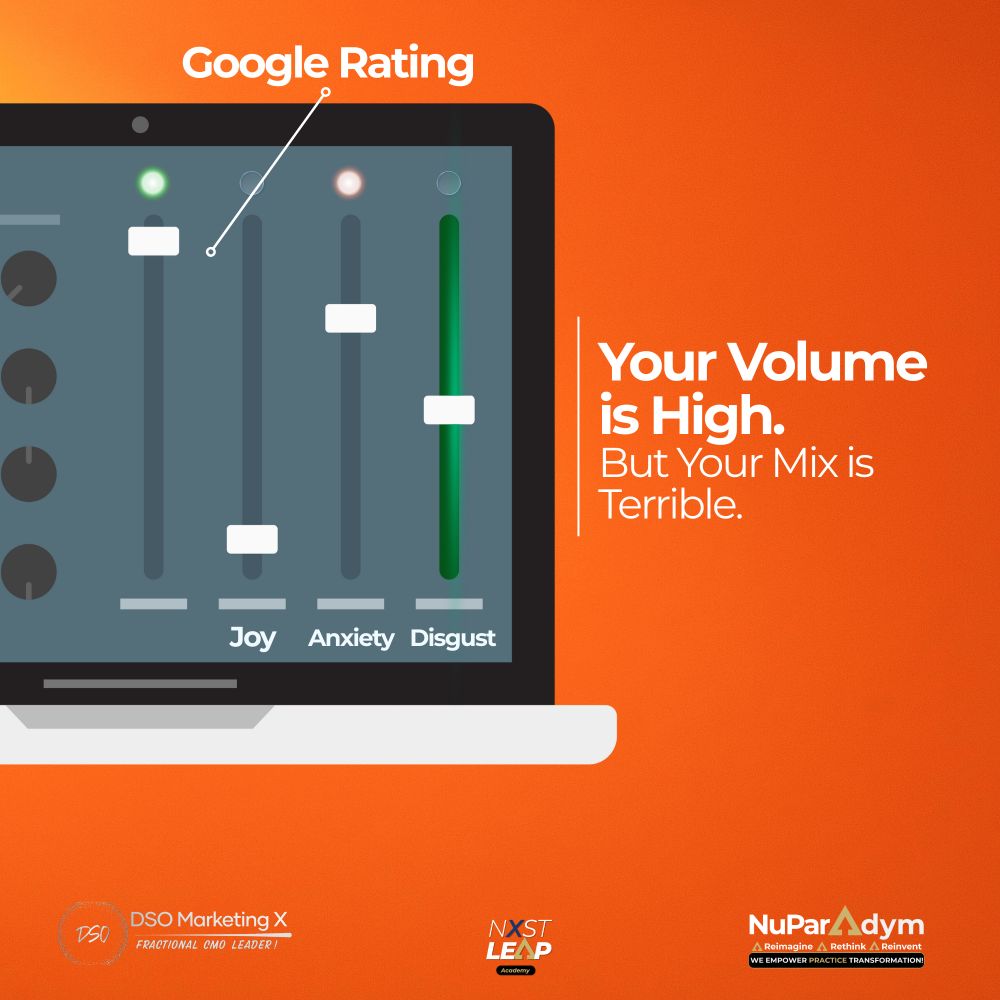
- "Disgust" is the silent killer. A 4star review mentioning a smell in the lobby predicts churn better than a 3-star review about wait times.

Section 1: The Failure of "Valence"
Most DSOs run on simple dashboards. You have a widget for Google Ratings and a widget for NPS.
These metrics rely on Valence. A one-dimensional scale measuring "Good" vs "Bad."The problem is that human emotion is not one-dimensional.
Two patients can give you a "Negative" score. But their business impact is completely different.
Patient A is Sad.The Text: "I was disappointed that the doctor didn't have time to explain the procedure fully. I felt a bit ignored."
The Emotion: Sadness.
The Behavior: Sadness causes withdrawal. This patient is low-energy. They drift away quietly. They do not complain. They just never come back.
The Fix: This requires Empathy. They need to feel heard. A warm, personal phone call saves this relationship.
Patient B is Angry.
The Text: "I waited 45 minutes past my appointment time! This is disrespectful!"
The Emotion: Anger.
The Behavior: Anger is a high-arousal emotion. It drives attention. It drives action. This patient will tell five friends about their bad experience.
The Fix: This requires Resolution. They do not want a hug. They want a solution. They want their time back or a discount.
If your dashboard lumps both of these into "Negative Sentiment," you fail.
If you treat the Sad patient with Resolution (e.g., "Here is a $50 credit"), they feel bought off. You lose them.
If you treat the Angry patient with Empathy (e.g., "I hear you, that must be hard"), they feel patronized. You lose them.
Research on high-stakes service environments confirms this. The single most effective variable for lifting patient sentiment is "topic matching," ensuring your response directly addresses their specific issue. Not a generic template. Not a redirect to a contact form.
Direct acknowledgment. Specific response. Matched to their concern.
The Operator's Move:
Move beyond the "Negative" bucket. Tag feedback by specific emotional driver. This allows your call center and ops teams to deploy the right script for the right emotion.
Section 2: The Trust Economy and The Jargon Paradox
This is the most surprising finding in the data.
For years, marketing agencies have told doctors: "Keep it simple. Speak at a 5th-grade level. Avoid medical jargon."
The data says: That depends.
In a dental practice, information is asymmetric. You have the degree. The patient does not. The patient is looking for signals to bridge that gap. They are looking for Trust.
But "Trust" looks different depending on what the patient needs.
1. The Acute Care Scenario (Implants, Full-Arch, Emergency)
When a patient has a serious problem or needs a high-value, irreversible procedure, they are afraid.
In this context, medical jargon works.
Using precise, technical terminology signals competence. It signals authority. It tells the patient, "I am an expert. You are safe in my hands."
The research confirms this. Physicians using appropriate medical terminology in short video content saw increased patient conversion for acute conditions. The complexity builds the value.
The Strategy: For your All-on-X funnels or oral surgery marketing, do not dumb it down too much. Use the correct terms. Explain the anatomy. Show the technology.
2. The Chronic Care Scenario (Hygiene, Recare, Invisalign)
When a patient is coming in for maintenance or cosmetic work, they are not afraid. They are looking for a relationship.
In this context, medical jargon hurts.
It creates distance. It makes the doctor feel like a technician rather than a partner. It reduces the intimacy of the relationship.
The Strategy: For your recall emails and hygiene scripts, use plain English. Focus on warmth. Focus on "we" and "us."
3. The Follower Count Variable
This nuance extends to social media.
If your doctors are building personal brands (which they should be), the rules change based on their audience size.
Small Following: The doctor is seen as a local provider. Jargon builds credibility. It proves they are a "real doctor," not just an influencer.
Large Following: The doctor is seen as a celebrity. The relationship is parasocial. If they use too much jargon, it breaks the illusion of friendship. It makes them seem distant and corporate.
Research on physician short video content confirms this pattern. The trust-building effect of technical language diminishes as follower counts grow.
The Operator's Move:
Audit your marketing copy and chairside scripts.
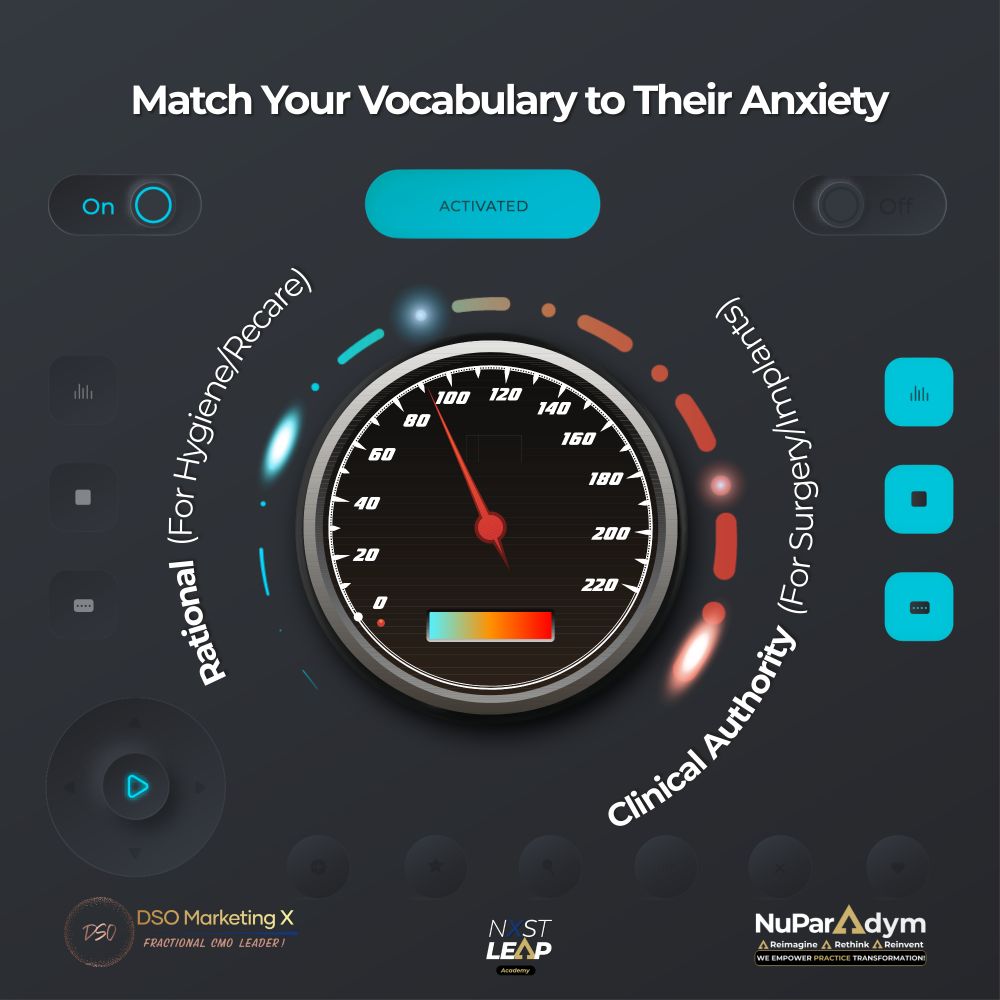
Are you using "Hygiene Language" for "Surgery Problems"?
Are you using "Surgery Language" for "Hygiene Problems"?
Match the language to the anxiety level of the patient.
Section 3: Mining the Gold (NADE and VADER)
You cannot manually read 5,000 reviews across 20 locations. You need a system.
Here are two advanced frameworks changing the game. You do not need to be a data scientist to understand the output, but you need to know they exist so you can ask your vendors for them.
1. NADE (Natural Affect Detection)
Patients do not just use words anymore. They use emojis. They use slang. They use typos.
Standard sentiment tools fail here. They see a cry-laughing emoji and get confused. Is it sad? Is it happy?
NADE is a text-to-emoji-to-emotion converter. It maps emojis to specific emotional intensities on Plutchik's Wheel of Emotions.
Why does this matter?
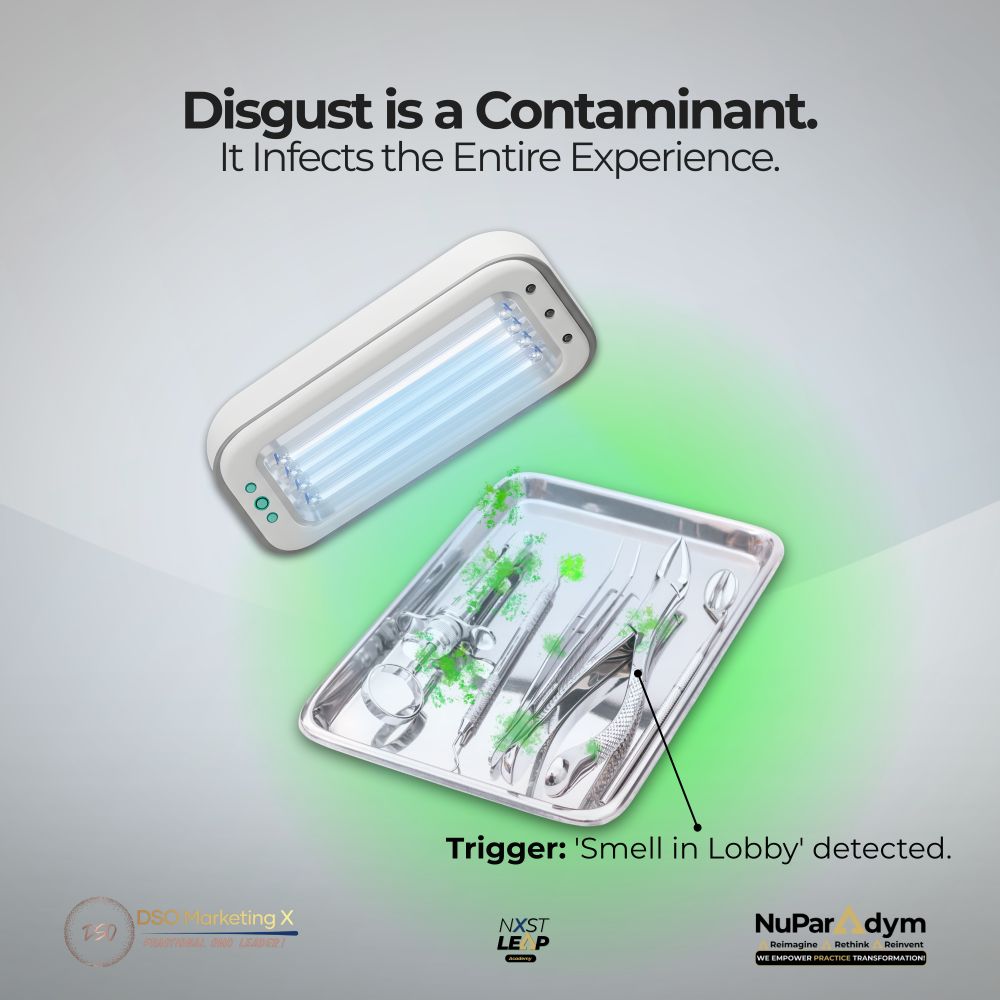
Because it detects Disgust.
"Disgust" is a silent killer in dental.
A patient might rate you 4 stars because the doctor was good. But in the text, they mention a "stained carpet" or a "smell in the waiting room."
NADE flags this as Disgust.
Disgust is the single most powerful repellant in consumer behavior. It overrides Joy. It overrides Trust. If a patient feels disgust, they never return.
A standard Positive/Negative tool misses this. It sees the 4 stars and moves on. NADE highlights the "smell" comment in red.
2. VADER (Valence Aware Dictionary and Sentiment Reasoner)
This tool analyzes intensity.
It understands that "The service was good." and "The service was GOOD!!!" are two different data points.
Capitalization, punctuation, and modifiers change the score.
Low Intensity Positive: "Good." This signals weak loyalty. High churn risk.
High Intensity Positive: "AMAZING!!!" This signals high loyalty. Referral source.
The Operator's Move:
Stop looking at average star ratings. Start looking at Sentiment Intensity.
Segment your patient base.
High Intensity: Ask for referrals immediately.
Low Intensity: Put them in a nurture campaign. They are not sold yet.
Section 4: The AI Trust Multiplier
Here is where it gets interesting for operators focused on production.
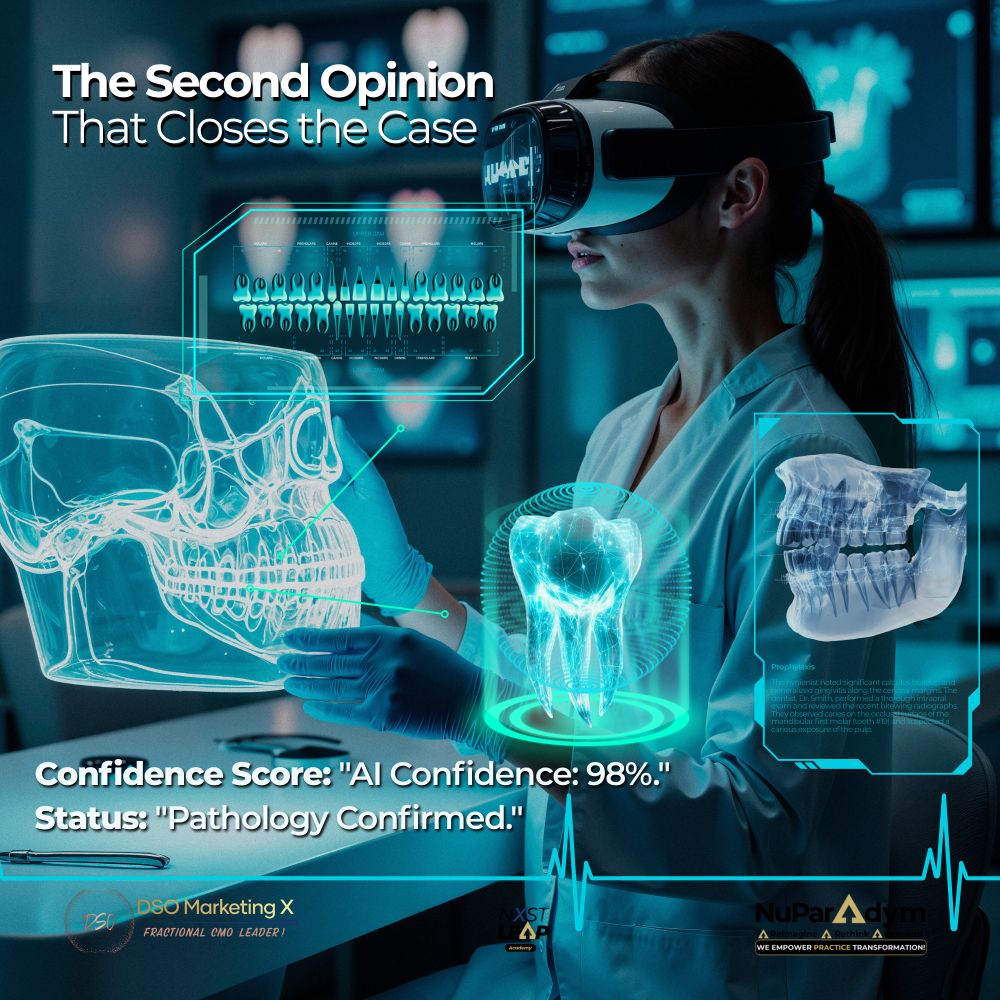
Patients trust AI-backed recommendations more than explanations alone.
The data is striking.
59% of surveyed patients are more likely to accept treatment recommendations when they know AI was involved in the diagnosis. Among Baby Boomers, that number jumps to 65%. Among Gen X, 51%.
A VideaHealth study across 470,831 patients and 100 locations found that practices using AI detection saw a 13% rise in annual net production for restorative and periodontal treatments. That translates to an average of $78,268 per practice per year.
Why does AI build trust?
Because patients face an information gap. They cannot independently evaluate clinical quality. They rely on signals. And AI serves as a credibility signal that something objective, not just the dentist's opinion, supports the recommendation.
"Patients trust healthcare more when it's backed with AI, but they won't trust AI on its own," as Adam McDaniel from Henry Schein One put it. "Do they want an office that's using technology to help create a better experience? Overwhelmingly yes."
The Four-Stage AI Care Framework
For operators thinking about how to structure AI-enabled patient communication, research points to four stages that build on each other.
Stage 1: Emotion Recognition. The system accurately identifies the patient's emotional state. Sadness versus anger versus fear. This happens through text analysis, call transcript processing, or feedback categorization.
Stage 2: Emotion Understanding. The response expresses appropriate empathy. AI can now score higher on perceived empathy than rushed human responses in text-based contexts. The key is matching tone to the identified emotion.
Stage 3: Emotion Management. The system provides specific recommendations to address the patient's concern. Not generic. Tailored to their situation and emotional state.
Stage 4: Emotional Connection. Over time, consistent recognition and response builds a sense that the practice genuinely cares. This is where loyalty gets built.
Most practices are stuck at Stage 1 or skipping it entirely. The competitive advantage goes to groups that move through all four stages systematically.
Section 5: The Hallucination Trap
We are moving toward an era of "Feeling AI."
Generative AI can now analyze this data at scale. It can read every call transcript, every DM, and every review in seconds. It can also draft responses.
Studies show that AI-generated responses to medical questions are often perceived as more empathetic than human responses. Why? Because the AI does not get tired. It does not have a bad day. It is polite, detailed, and patient.
But there is a trap.
The Hallucination Risk.
GenAI wants to please you. Sometimes, it invents facts to support a sentiment.
In one study, AI analyzed a review of a whisky. It claimed the whisky had "bacon notes." The review never mentioned bacon. The AI hallucinated the detail because it associated "smoky" with "bacon."
In dentistry, this is dangerous.
Imagine an AI responding to a patient review about a filling. The AI might hallucinate that the patient had a root canal. If you post that response, you violate privacy. You look incompetent. You lose trust.
The Hybrid Solution:
The winning model is the Human-LLM Hybrid.
AI does the mining: It scans the 10,000 reviews. It categorizes them by emotion (Joy, Fear, Disgust). It drafts the response.
Human does the check: A real person (Ops or Marketing) reviews the draft. They verify the facts. They ensure the tone is right.
This gives you the scale of automation with the safety of human oversight.
Section 6: Operational Action Plan
How do we turn this into booked appointments next week?
Here is your checklist.
1. The "Ghost Revenue" Audit
Pull a list of all patients who gave you a 5-star review in the last 12 months but have not returned for their next hygiene visit.
Run their review text through a basic sentiment scan (or just read the last 50 manually).
Look for "Low Intensity" words: "Fine," "Good," "Okay."
Look for "Hidden Friction": Mentions of wait time, billing confusion, or parking.
These are your leaks. Fix the operational issue, then reactivate them.
2. The Response Pivot
Change how you respond to negative reviews.
If they sound SAD: Use warm, personal language. "We are so sorry we let you down. We want to listen."
If they sound ANGRY: Use active, professional language. "Please contact our manager immediately. We need to resolve this."
88% of consumers expect replies to all reviews. Stop copy-pasting the same "Thank you for your feedback" template. It insults the patient.
3. The Trust Content Mix
Review your ad spend.
High-Value Funnels (Implants, Full-Arch): Ensure your copy uses Authority Language. Do not be afraid of technical terms. Show the technology.
New Patient and Hygiene Funnels: Ensure your copy uses Relational Language. Focus on comfort, ease, and team photos.
4. The Disgust Scan
Walk through your practice today. Look for Disgust Triggers.
Stains on the ceiling tiles.
Worn-out magazines from 2019.
Smells.
Dust on the baseboards.
These trigger the Disgust emotion, which NADE identifies as a conversion killer. You can have the best clinical work in the world, but if the patient feels Disgust in the lobby, they perceive the clinical work as dirty.
5. The AI Integration Check
Are you using AI-assisted diagnostics? If so, are you telling patients?
59% trust boost is sitting on the table. Make sure your chairside communication includes the phrase "Our AI detection system confirmed..." when presenting treatment plans.
The Opportunity
The dental market is tightening.
New patient acquisition costs are rising. PPO reimbursements are stagnant.
You cannot afford to lose patients who are already in your chair.
The old way, counting stars, is a vanity metric. It makes you feel good, but it does not help you grow.
The new way, sentiment mining, is harder. It requires listening. It requires distinguishing between a sad patient and an angry one. It requires balancing jargon and simplicity.
But the payout is massive.
When you understand the emotion behind the review, you stop guessing. You start predicting. You move from managing reputation to managing relationships.
That is how you turn unstructured text into a full schedule.
Patient Sentiment
I have developed a Patient Sentiment Audit Checklist.
It is a simple one-pager. It lists the top 20 "Trigger Words" found in dental reviews that predict churn, even in 5-star reviews.
It breaks them down by Emotion (Sadness, Anger, Disgust, Fear) and gives you the exact script to use to recover that patient.
Want it?
Comment "GOLD" below.
I will DM you the checklist and a PDF summary of the sentiment analysis research.
Or if you are ready to talk about how sentiment analysis fits into your 2026 marketing strategy, book a 23 minute pilot scoping call.
Let us stop counting stars and start mining gold.
Are you tired of your marketing not working. Book a 23-minute scoping call! Click the link. Quick Meeting
Get the breakdown in your inbox. Join the Marketing+GenAI Power Brief Today!
📲 Check out our website: NuParadym
🎥 Get more info from our YouTube Channel: NuParadym YouTube
📲DSO Marketing X Website: DSOMarketingX
📲NXST LEAP Academy: NXST LEAP Academy
About the Author
Sources:
- BrightLocal Consumer Review Survey 2024
- Henry Schein One 2025 Dental Trends Outlook
- Henry Schein One Industry Report (46% case acceptance baseline)
- VideaHealth: Dental AI Impact Study (470,831 patients, 100 locations, $78,268 production lift)
- Forbes: AI Would Make People Trust Their Dentist More (59% treatment acceptance lift)
- Planet DDS 2025 Dental Industry Outlook
- Natural Affect Detection (NADE): HotzBehofsits et al., 2025
- Valence Aware Dictionary and Sentiment Reasoner (VADER): Hutto & Gilbert
- The Caring Machine: Feeling AI for Customer Care: Huang & Rust, 2024
- Journal of Interactive Marketing: Physician Short Video Impact Study (Liu & Wang, 2024)
- Psychology and Marketing: Empathy and Customer Experience Research