 MARC
MARC

Planning Season is Here, Time to Level Up Your Game
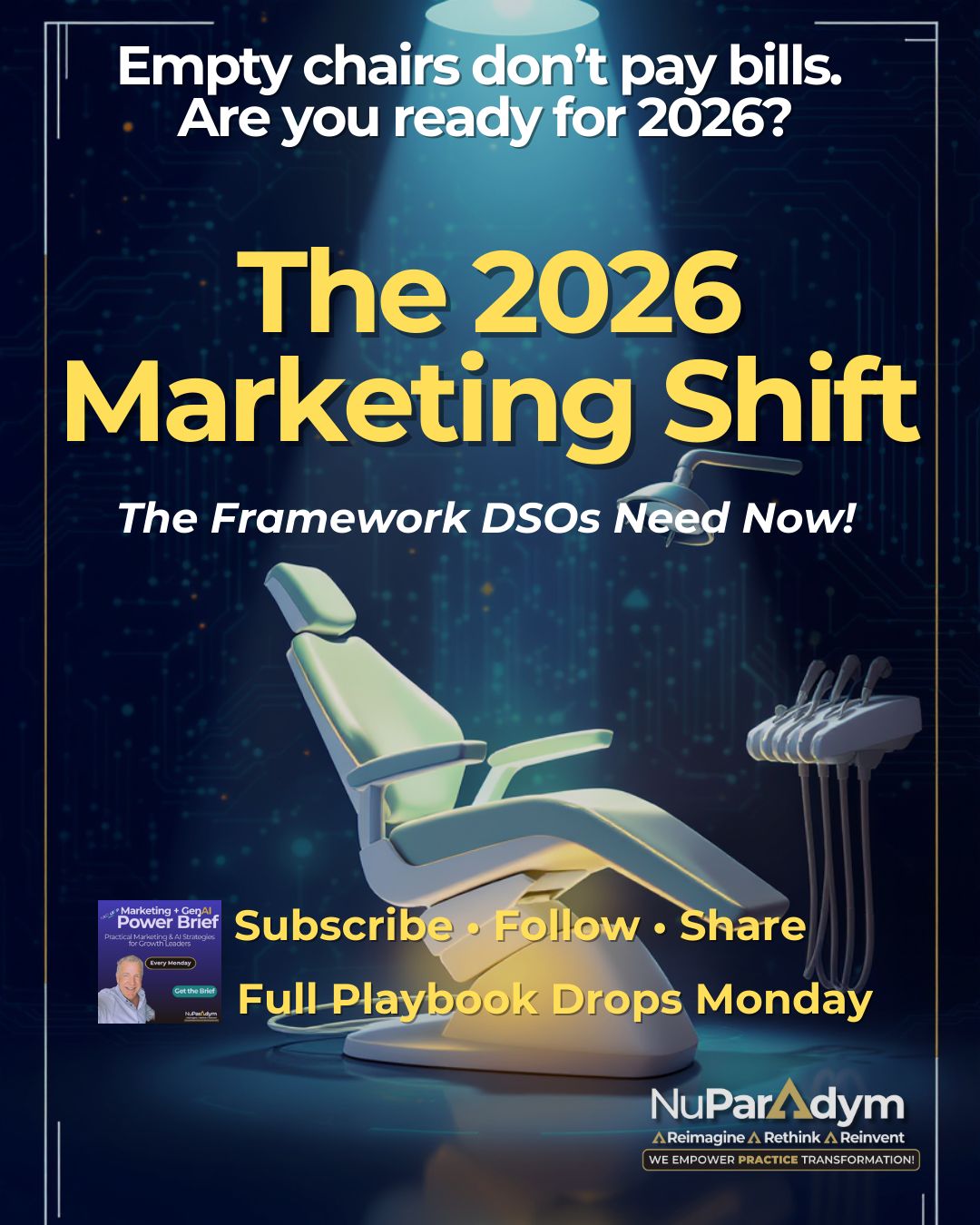
Have you started planning for 2026? Are you thinking differently, or have you been doing this for so long you think you've got this locked down? Here's the reality check: change is constant, and if you aren't evolving your approach, you're already behind.
Groups that dominate 2026 are the ones building integrated marketing systems today!
We're deep into planning season, and if you're not already thinking about 2026 with fresh eyes, you're missing the biggest strategic opportunity in years. The dental landscape is shifting faster than California traffic during rush hour, and the organizations that nail their strategic marketing foundation now are the ones that'll be crushing it while others are still figuring out their tech stack.
After diving deep into the latest industry data and spending time with DSOs and multi-practice executives across the country, I'm seeing some major shifts that are going to separate the winners from the "wish we had" crowd in 2026. The challenge isn't just knowing what's changing, it's leading your team through a planning process that actually captures these opportunities instead of defaulting to "what worked last year."
Many of the most successful DSO leaders I work with tell me their biggest struggle isn't identifying what needs to change but facilitating strategic sessions that get their teams aligned on how to execute differently. The frameworks and insights I'm sharing below have transformed how organizations approach their 2026 planning, and how they lead those critical strategy conversations that determine whether plans actually become results.
Let's break down what actually matters and how to build a marketing strategy that doesn't just keep up but gets you ahead of the curve.
The Reality Check: Where Organizations Actually Stand Right Now
Let's start with some truth. The days of easy growth through acquisitions are long gone, and smart DSOs are pivoting hard toward maximizing what they already have. According to the latest industry reports, DSO affiliation has grown from 8.8% in 2019 to over 25% today, but that growth has slowed. Translation: the low-hanging fruit is picked, and now we're in the optimization game. The focus has shifted to “same store growth.”
What does this mean for your marketing strategy? Everything. You can't just throw money at patient acquisition anymore and expect magic. The groups winning in 2026 are the ones building sophisticated, data-driven marketing engines that align capacity with demand, create genuine patient connections, and leverage technology to do more with less.
The Four Pillars of DSO Marketing Strategy for 2026
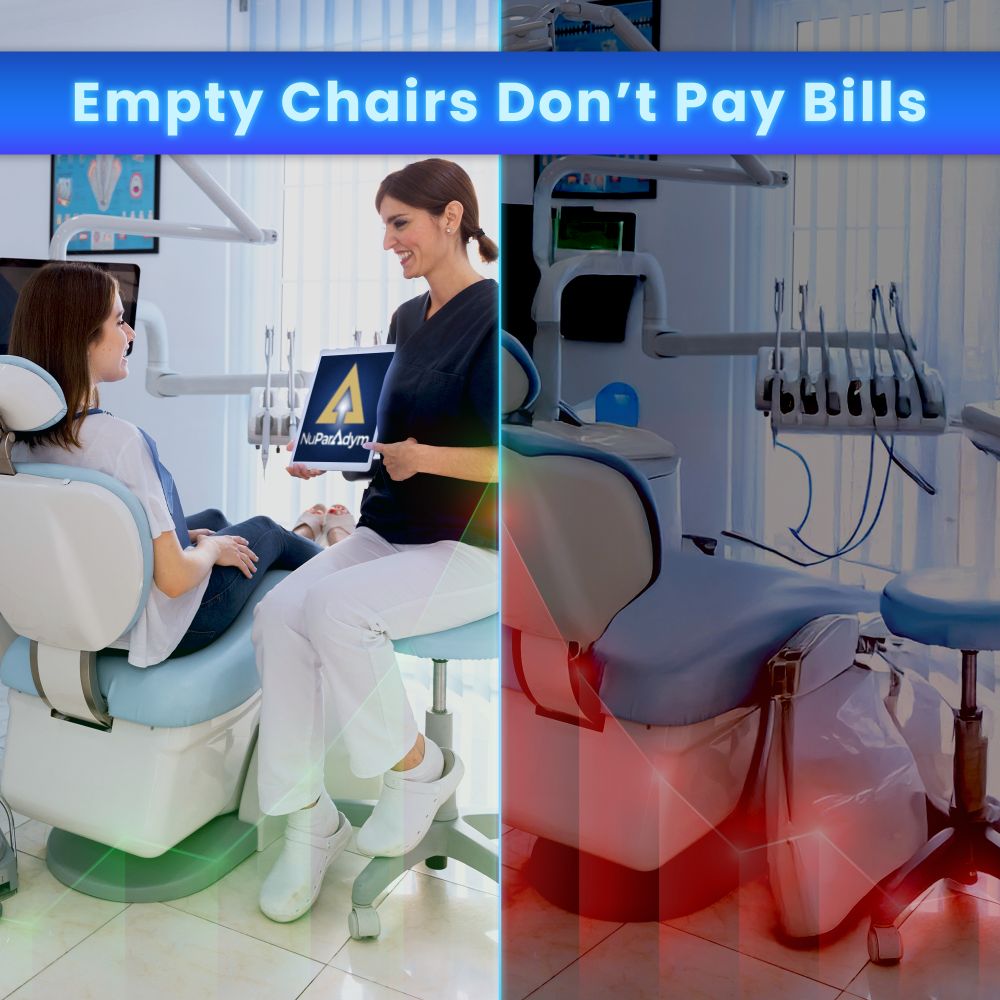
Pillar 1: Capacity-First Marketing (Because Empty Chairs Don't Pay Bills)
Here's where most DSOs are getting it wrong: they're marketing like it's 2019. You cannot run effective marketing campaigns without understanding your actual capacity at the practice, doctor, hygienist, and service line level. Period.
I've seen too many groups waste massive marketing spend driving patients to practices that can't handle the volume, creating frustrated patients and burned-out teams. The winning strategy for 2026 starts with a capacity audit:
The Capacity Assessment Framework:
- Map current utilization rates by location and provider
- Identify optimal patient flow patterns
- Calculate realistic growth capacity without compromising care quality
- Align marketing investment with actual availability
- Know your average case value per treatment and what drives revenue
Once you have this foundation, your marketing becomes surgical instead of scattered. You're not just driving leads, you're driving the right leads to the right places at the right time.
Pillar 2: Marketing + Operations Alignment (MOPS)
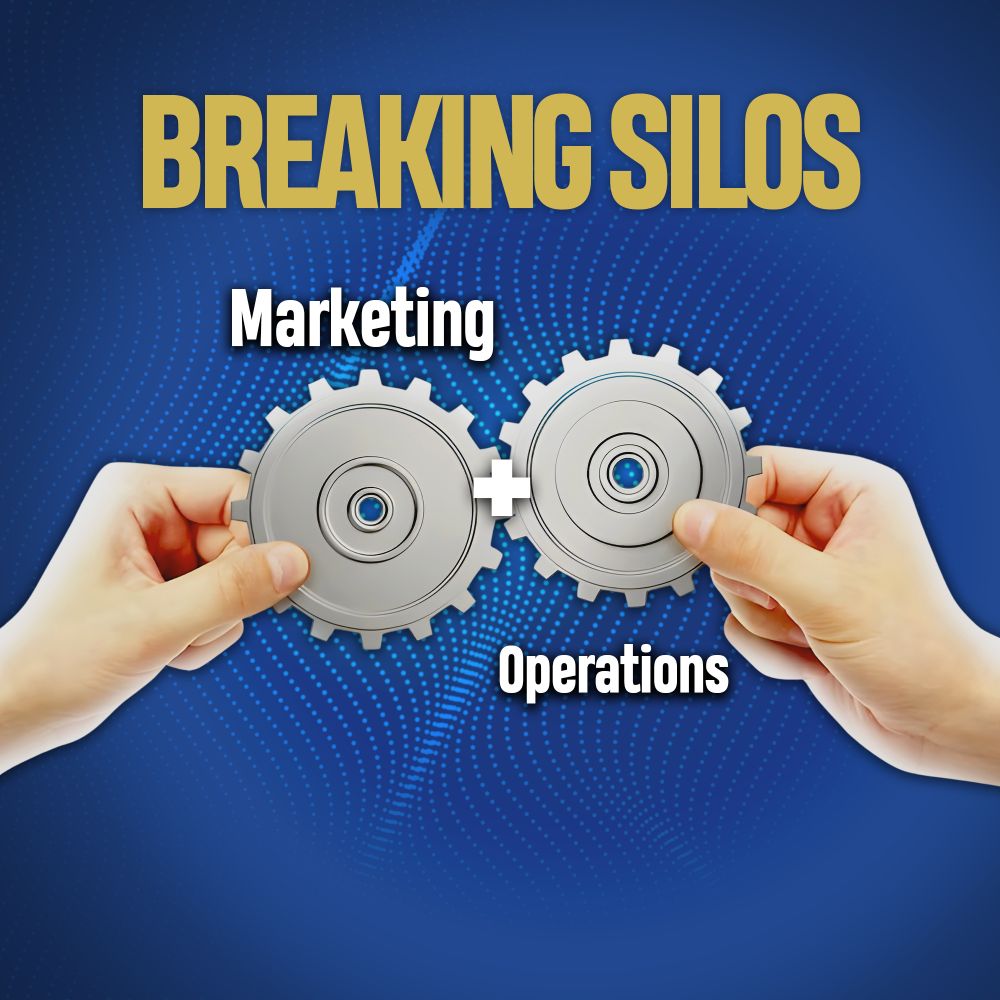
This is where the magic happens. The most successful DSOs in 2026 are breaking down the silos between marketing and operations teams. They're creating what I call "MOPS alignment." Where every marketing decision considers operational impact and every operational change informs marketing strategy. MOPS stands for Marketing + Operations alignment. It's the integration between your marketing team and your operational teams (front desk, clinical staff, practice managers, etc.)
Key MOPS Integration Points:
- Service line prioritization (marketing high-value services like orthodontics)
- Consistent messaging that matches actual practice capabilities
- Integrated tech stack that enables data sharing and smarter campaigns
- Real-time feedback loops between patient experience and marketing messaging
The groups nailing this are seeing 30-40% improvements in cost per acquisition and significantly higher patient lifetime value because they're delivering on what they promise.
Pillar 3: AI-Powered Personalization at Scale
Let's talk about the elephant in the room: artificial intelligence. But not the hyped-up version you see in clickbait articles. I'm talking about practical AI implementation that actually moves the needle.
The breakthrough for DSOs is understanding that AI isn't about replacing human connection, it's about enhancing it. The most effective implementations I'm seeing combine AI efficiency with human empathy to create what researchers call "caring machines."
High-Impact AI Applications for DSOs:
- Emotion Recognition in Patient Communications: AI can analyze patient sentiment in calls, emails, and reviews to trigger appropriate response protocols
- Predictive Patient Journey Mapping: Understanding which patients are likely to need specific services and when
- Dynamic Content Personalization: Automatically adjusting website content, email campaigns, and social media based on patient behavior and demographics
- Intelligent Call Routing: Ensuring patients connect with the right team member based on their emotional state and needs
The key is building AI systems that enhance the patient's emotional journey, not replace it. Patients can tell when they're talking to a machine, but they respond incredibly well when technology makes their human interactions more meaningful and efficient.

Pillar 4: Measurement Beyond Vanity Metrics
This is where I see the biggest opportunity gap. Most DSOs are measuring the wrong things or measuring the right things poorly. In 2026, the winning organizations are moving beyond basic metrics like click-through rates and cost per click to focus on what actually matters: patient lifetime value, show rates, and long-term practice health.
The New DSO Marketing Scorecard:
Technology Integration: Building Your 2026 Stack
- Patient Lifetime Value (LTV) by Acquisition Channel: Which marketing efforts bring in patients who stick around and receive comprehensive care?
- Patient Acquisition Cost (PAC) ROI by Channel: Track cost per acquisition against actual revenue generated from each marketing channel to identify your most profitable patient sources
- Average Case Value Analysis: Monitor corporate benchmarks alongside location-specific performance to identify training opportunities and market variations
- Average Case Value by Procedure: Understand which services generate the most revenue per patient interaction and where to focus marketing efforts for maximum impact
- Show Rate Optimization: How many scheduled appointments actually happen, and what marketing messaging improves this?
- Cross-Service Adoption: Are patients who come in for cleanings also getting the orthodontics or oral surgery they need?
- Capacity Utilization Efficiency: Is your marketing driving the right mix of services to optimize provider time?
These metrics are essential for DSO marketing because they connect marketing spend directly to financial outcomes. This gives leaders the data they need to:
- Identify which marketing channels actually generate profitable patients (not just leads)
- Spot training opportunities when location case values lag corporate averages
- Focus marketing investment on procedures that drive the highest revenue per patient
- Make data-driven decisions about marketing budget allocation
The tech landscape is consolidating around integrated platforms rather than point solutions. The organizations preparing for 2026 are investing in systems that talk to each other and provide unified patient experiences.
The key is building AI systems that enhance the patient's emotional journey, not replace it. Patients can tell when they're talking to a machine, but they respond incredibly well when technology makes their human interactions more meaningful and efficient.
Essential Technology Components:
- Patient Communication Platforms: Beyond simple appointment reminders, these systems need to handle emotional intelligence, recognizing when a patient is anxious, celebrating milestones, and providing personalized care guidance.
- Integrated Analytics Dashboards: Real-time visibility into marketing performance, operational metrics, and patient satisfaction scores in one place. No more switching between twelve different systems to understand what's working.
- AI-Enhanced CRM: Customer relationship management that learns from patient interactions and suggests the best next actions for care coordinators and marketing teams.
- Automation with Heart: Using technology to handle routine tasks while ensuring every patient touchpoint feels personal and caring.
GenAI Implementation Guide: From Data to Decisions
Most DSOs are sitting on goldmines of data but lack the tools to extract actionable insights. Here's your step-by-step guide to implementing GenAI for capacity and marketing analysis:
Tool Selection (paid versions, not free):
- Claude or ChatGPT for advanced data analysis and strategic planning
- Google Gemini for seamless integration with Google Analytics, Workspace, and existing Google ad campaigns
- Microsoft Copilot if you're in the Microsoft ecosystem with Power BI
- Gemini, AI Studios for creating personalized graphics and video content at scale (patient education, team training, marketing materials)
- Specialized platforms like Tableau with Einstein AI for enterprise-level implementations
Data Preparation Process:
- Export key data sets from your practice management system (anonymized patient data, appointment scheduling, revenue by service line)
- Clean and format data for AI analysis (remove personal identifiers, standardize date formats)
- Create baseline benchmarks for comparison
Essential Prompts for Analysis:
Capacity Optimization: "Analyze this appointment scheduling data to identify: (1) optimal appointment mix by provider type, (2) seasonal capacity fluctuations, (3) opportunities to reduce gaps in schedules, and (4) recommended patient flow adjustments to maximize revenue per available hour."
Marketing ROI Analysis: "Compare marketing campaign performance across these data sets and identify: (1) which campaigns drive highest lifetime value patients, (2) optimal budget allocation by service line and location, (3) seasonal trends that should inform campaign timing, and (4) patient journey patterns that predict successful treatment completion."
Competitive Intelligence: "Based on this market data, analyze our competitive position and recommend (1) service lines where we have advantages to leverage, (2) geographic areas for expansion priority, (3) pricing strategy adjustments, and (4) marketing message differentiation opportunities."
Implementation Timeline:
- Weeks 1-2: Data extraction and cleaning
- Weeks 3-4: Initial AI analysis and insight generation
- Weeks 5-6: Strategy development based on AI recommendations
- WWeeks 7-8: Implementing quick wins and optimizing the system
The key is starting with specific, actionable questions rather than asking AI to "analyze everything." Focus on decisions you need to make, then work backward to the data and analysis required.
The Patient Experience Revolution
Here's what's changing everything: patients are expecting healthcare experiences that match what they get from Amazon, Apple, and other consumer brands. But they still want the human connection that makes healthcare special.
The DSOs winning in 2026 are mastering this balance. They're using technology to eliminate friction and frustration while amplifying the human moments that build trust and loyalty.
Key Patient Experience Strategies:
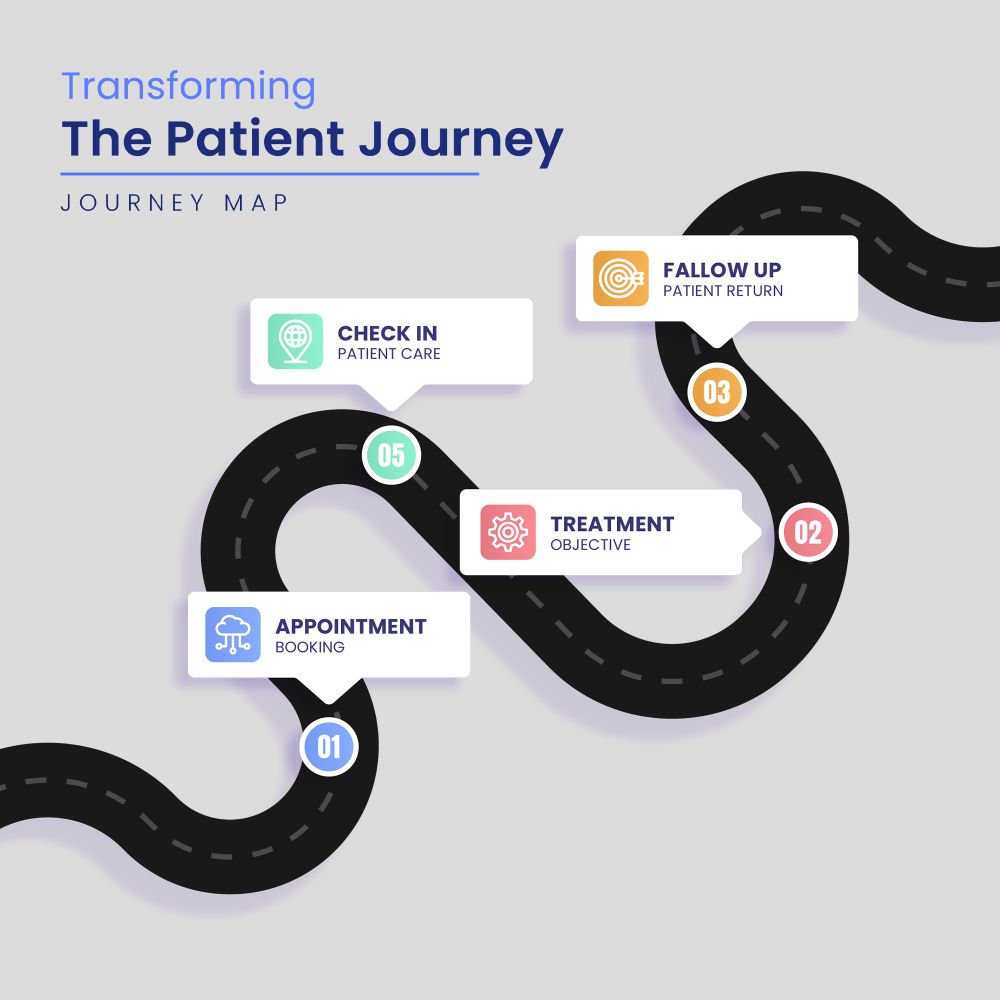
Emotional Journey Mapping: Understanding the emotional state of patients at each touchpoint and designing responses that address both practical and emotional needs.
Proactive Communication: Using predictive analytics to reach out to patients before they have problems, not just when they miss appointments.
Seamless Transitions: Whether a patient is moving between locations, providers, or services, the experience feels connected and intentional.
Value-Based Engagement: Helping patients understand the connection between oral health and overall wellness, positioning your organization as a partner in their health journey, not just a service provider.
Content Strategy That Actually Converts
The content game is evolving fast. Generic dental health tips aren't cutting it anymore. The winning DSOs are creating content that serves specific patient emotional and practical needs while showcasing their unique value proposition.
High-Converting Content Categories:
Behind-the-Scenes Authenticity: Patients want to see the real people and processes behind their care. Employee-generated content that shows genuine care and expertise performs incredibly well.
Educational Confidence Building: Content that helps patients understand procedures and feel confident in their decisions. But make it specific to your actual services and capabilities.
Community Connection: Showing how your practices are embedded in and serving their local communities. This builds trust and referral networks simultaneously.
Patient Success Stories: Real transformation stories that highlight both clinical outcomes and the human experience of care.
The key is starting with specific, actionable questions rather than asking AI to "analyze everything." Focus on decisions you need to make, then work backward to the data and analysis required.
The Social Media Shift: Platforms and Strategies for 2026
The social media landscape is fragmenting, and DSOs need strategies that work across multiple platforms while maintaining a consistent brand voice.
Platform-Specific Strategies:
Instagram/TikTok: Short-form video content showing procedures, team personalities, and patient transformations. The key is balancing professional credibility with an approachable personality.
Facebook: Community building and local engagement. Still the best platform for reaching patients in their 40s and 50s who are making family dental decisions.
YouTube: Long-form educational content that builds trust and serves as evergreen marketing assets. Answer the questions patients are actually asking, not just what you want to tell them.
LinkedIn: B2B relationship building with referring providers and community partnerships. Share thought leadership content about industry trends and practice management insights.
Measurement and Analytics: Building Your Data Foundation
This is where most DSOs are leaving money on the table. You can't improve what you don't measure, and you can't measure what you don't track consistently.
Essential Metrics for 2026:
Attribution Modeling: Understanding the full patient journey from first touch to completed treatment, including all the marketing interactions that contributed to conversion.
Cohort Analysis: Tracking patient behavior and value over time to understand which acquisition strategies produce the best long-term results for patients with similar issues.
Operational Impact Metrics: How marketing activities affect operational metrics like no-show rates, case acceptance, and treatment completion.
Competitive Intelligence: Understanding your market position and adjusting strategies based on competitive landscape changes.
Implementation Roadmap: Getting Started Now
Building a 2026-ready marketing strategy doesn't happen overnight, but since we're in planning season right now, you need to start executing the foundational pieces before the end of 2025:
Q4 2025 (Starting Now): Foundation Building
- Conduct comprehensive capacity assessment across all locations
- Audit current technology stack and identify integration opportunities
- Establish baseline metrics and reporting infrastructure
- Begin team training on new systems and processes
- Implement GenAI tools and initial data analysis workflows
Q1 2026: Technology Integration and Optimization
- Deploy integrated analytics platform
- Launch AI-enhanced patient communication tools
- Implement personalization engines based on Q4 data analysis
- Establish refined MOPS alignment protocols
- Begin testing advanced attribution models
Q2 2026: Content and Campaign Launch
- Launch personalized content campaigns based on patient journey mapping
- Implement emotion-aware patient communication strategies
- Optimize social media strategies for emerging platforms
- Scale successful GenAI applications across all locations
Q3-Q4 2026: Scale and Strategic Evolution
- Scale successful pilots across all locations
- Refine measurement and optimization processes
- Plan for 2027 expansion and technology upgrades
- Document best practices for ongoing team development
- Begin competitive advantage consolidation
The Bottom Line: What Separates Winners from Wishers
The DSOs that dominate 2026 are the ones building integrated marketing systems today. They're not just adopting new technologies, they're reimagining how marketing, operations, and patient care work together to create extraordinary experiences and sustainable growth.
This isn't about having the biggest marketing budget or the flashiest technology. It's about building systems that understand patients as humans, leverage data to make smart decisions, and create genuine connections at scale.
The opportunity is massive, but the window for easy wins is closing. The DSOs that start building these capabilities now will have a significant competitive advantage. The ones that wait will be playing catch-up while their more strategic competitors capture market share and top talent.
Your Next Step: Pick one pillar from this framework and commit to building it properly over the next 90 days. Don't try to do everything at once. Master one area, then expand. The DSOs that win in 2026 are the ones that execute consistently, not the ones with the prettiest PowerPoint presentations.
Ready to build a marketing strategy that actually works? Let's make 2026 the year your DSO becomes the standard that others try to copy.
Want to talk more? DM or click this link: Let's Talk!
Check out our website NuParadym.com and Subscribe to our YouTube channel.